Another loop type in the unequal lengths variation:
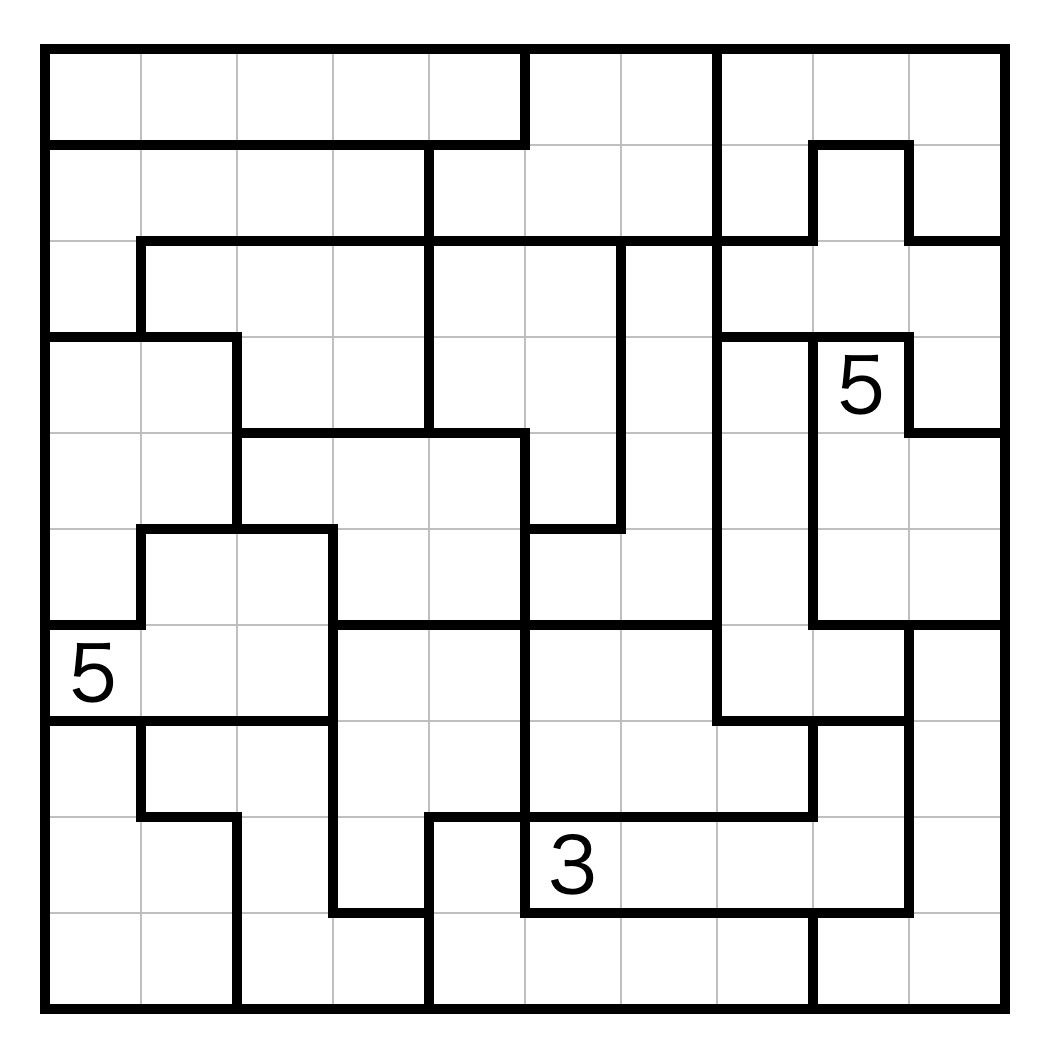
Rules Solve as a regular Country Road. Additionally, any two straight segments that meet at a point must have different lengths.
Another loop type in the unequal lengths variation:
Rules Solve as a regular Country Road. Additionally, any two straight segments that meet at a point must have different lengths.
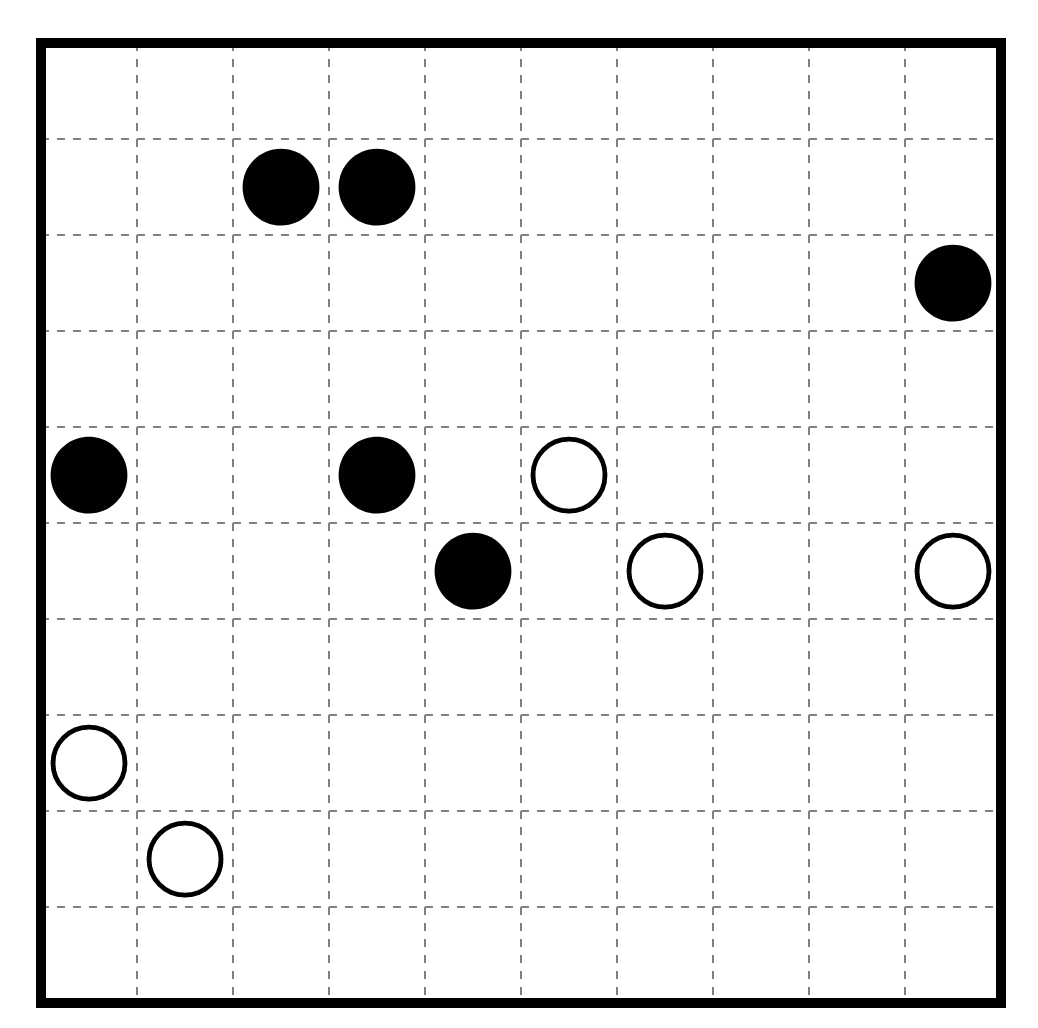
Continuing with the variant rule from the recent GP, here’s a Masyu [unequal lengths].
Rules Solve as a regular Masyu puzzle. In addition, any two straight line segments that meet at a corner must have different lengths.
This past weekend, the WPF hosted round 4 of the 2019 Puzzle Grand Prix, with puzzles by Russian authors. Puzzles/solutions/results are currently available under the previous link but should show up in the archive eventually. I’ll go over how it went for me below. One very interesting new variant on the test was “unequal lengths slitherlink”; here’s one:
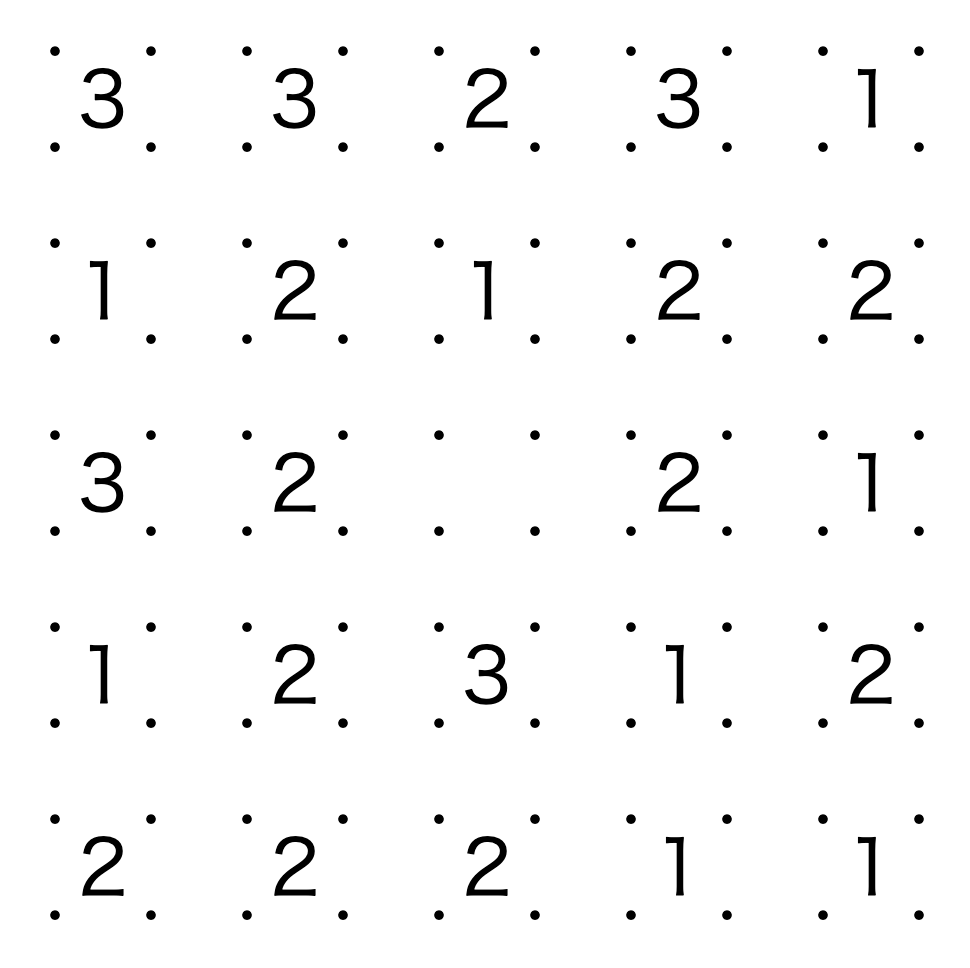
Unequal-lengths slitherlink
Rules Solve as a regular slitherlink. In addition, any two connected straight line segments must have different lengths.
I’ve wrapped up my recent changes to pzprjs in a new release, full changelog below. It’s live now on puzz.link. Please let me know if you find any bugs, or would like to contribute some missing translations.
The latest addition is the Nikoli puzzle type Scrin (スクリン); here’s a small sample puzzle:
https://puzz.link/p?scrin/6/6/g2h.zl.h4g
 Rules Draw some rectangles, such that every clue is inside a rectangle (of the given size if specified). Different rectangles can only touch by corners, and all rectangles must form a single non-branching loop via these corner-connections. Rectangles without clues are possible. Continue reading
Here’s a little Ring-ring puzzle I made when testing that a bug in pzprjs was really fixed. [puzz.link] [pzv.jp].
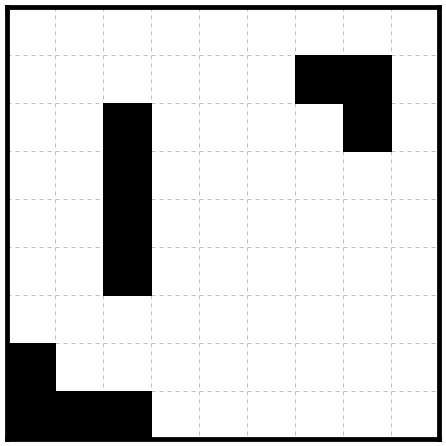 Rules Fill the empty cells of the grid by drawing rectangles that consist of horizontal and vertical lines between cell centers. The sides of different rectangles may intersect but not overlap. Rectangles can’t touch otherwise; in particular, they can’t touch by a corner.
Here’s a wacky Heyawake. [puzz.link] See e.g. mellowmelon for the rules.

Here’s another Angle Loop, and you can solve it on the new puzz.link:
(You might want to try the example first: https://puzz.link/p?angleloop/5/5/1a1ab6b0c1c0a4c3a1a)
puzz.link is a clone/fork of the excellent pzv.jp, a puzzle solving site and applet built by Daisuke Kobayashi. It seems the author has moved on, so when I wanted pzv support for some angle loops of mine, I decided to go ahead and fork the project. I’m hoping pzv.jp will be updated again and would be happy for my changes to make it upstream! I’ll be putting effort into separating the changes useful for upstream from site-specific changes.
For most puzzle types you can move them from one site to the other by switching between https://puzz.link/p? and http://pzv.jp/p.html? in the URLs.
There are three new puzzle types: Besides Angle Loop, there is Heyawacky which slightly generalizes Heyawake by allowing non-rectangular rules. And Nurimisaki is a type that was quite popular on the Japanese puzzle twitter this year, where it was shared using the Kurotto applet. I hope to post some example puzzles for the other types soon. The additions compared to pzv.jp are shown in the “Added puzzles” tab in the type list.
The second major change is that puzz.link… links? come with “rich link preview”, or whatever you want to call it.
I intend to keep updating this with new puzzle types and fixes as I need them, but I’m also happy to accept contributions. I would be particularly grateful for help in keeping the project Japanese: Some of the changes I’ve made so far are lacking Japanese translations, so please let me know if you can help with that.
If you have a bug report or want to submit some changes, head on over to github: robx/pzpr-puzzlink for the site, or more likely robx/pzprjs for the puzzle applet itself.
Here’s a new loop type. You can solve and check your answer over here. (Let me know if that works for you and is useful, very much work in progress.)
In other things:
Finally here’s the puzzle: Rules Draw two loops that consist of horizontal and vertical segments. One loop goes along the grid lines, while the other loop goes from cell center to cell center. Clues indicate how many of the (up to) four adjacent edges have an intersection of both loops.
Example


 Maybe Puzzles